


Editor’s Note: The following is one of the Western Journal’s most popular holiday-themed stories, re-posted in honor of Thanksgiving. This article was originally published on Nov. 27, 2025.
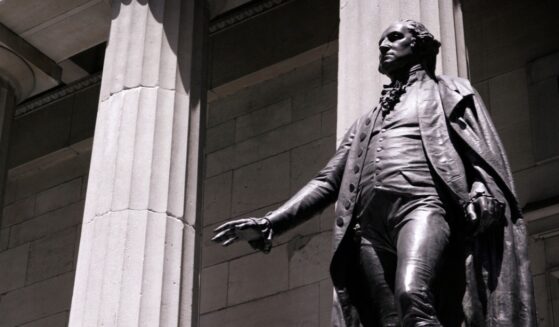
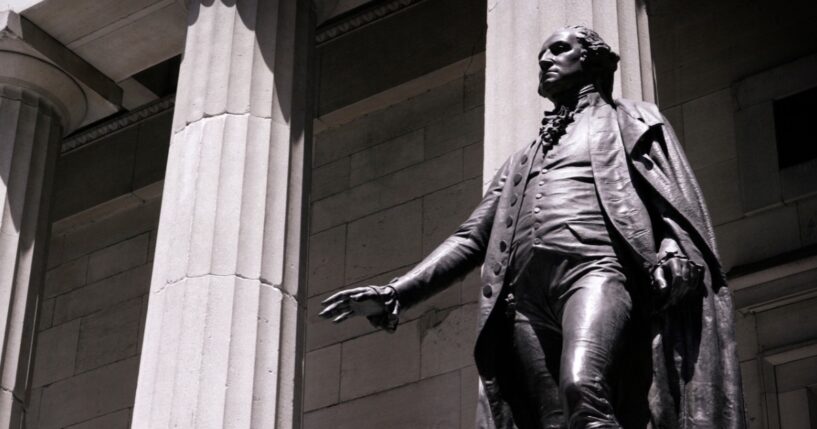
Both George Washington and Abraham Lincoln included the word “Providence” in Thanksgiving proclamations while serving as president.
It is a word that is not as common in current times, so it’s worth digging a little deeper as to what these men were referencing.
Webster’s dictionary defines it as “God conceived as the power sustaining and guiding human destiny.”
The 1828 edition elaborates, “In theology, the care and superintendence which God exercises over his creatures. He that acknowledges a creation and denies a providence involves himself in a palpable contradiction; for the same power which caused a thing to exist is necessary to continue its existence.”
Noah Webster was born in 1758, so his life intersected with not only the founding generation, but also Lincoln’s, who was born in 1809. Webster would seem a good source to determine what Washington and Lincoln meant by providence.
In Washington’s Thanksgiving proclamation of October 1789, he wrote, “Whereas it is the duty of all Nations to acknowledge the providence of Almighty God, to obey his will, to be grateful for his benefits, and humbly to implore his protection and favor — and whereas both Houses of Congress have by their joint Committee requested me to recommend to the People of the United States a day of public thanksgiving and prayer to be observed by acknowledging with grateful hearts the many signal favors of Almighty God especially by affording them an opportunity peaceably to establish a form of government for their safety and happiness.
Signing you in…
Please keep this page open. The results will appear here.
Check your email to count your vote
We sent a confirmation link to .
Click Confirm Your Vote in that email to count your vote and unlock the results.
Your vote has not been counted yet. If the email hasn't arrived, check your spam or junk folder.
“Now therefore I do recommend and assign Thursday the 26th day of November next to be devoted by the People of these States to the service of that great and glorious Being, who is the beneficent Author of all the good that was, that is, or that will be– That we may then all unite in rendering unto him our sincere and humble thanks–for his kind care and protection of the People of this Country previous to their becoming a Nation–for the signal and manifold mercies, and the favorable interpositions of his Providence which we experienced in the course and conclusion of the late war,” he continued.
“For the great degree of tranquility, union, and plenty, which we have since enjoyed–for the peaceable and rational manner, in which we have been enabled to establish constitutions of government for our safety and happiness, and particularly the national One now lately instituted–for the civil and religious liberty with which we are blessed; and the means we have of acquiring and diffusing useful knowledge; and in general for all the great and various favors which he hath been pleased to confer upon us.
“And also that we may then unite in most humbly offering our prayers and supplications to the great Lord and Ruler of Nations and beseech him to pardon our national and other transgressions– to enable us all, whether in public or private stations, to perform our several and relative duties properly and punctually–to render our national government a blessing to all the people, by constantly being a Government of wise, just, and constitutional laws, discreetly and faithfully executed and obeyed,” Washington said.
Interestingly, in his inaugural address, only months before, the newly elected president similarly observed, “No People can be bound to acknowledge and adore the invisible hand, which conducts the Affairs of men more than the People of the United States. Every step, by which they have advanced to the character of an independent nation, seems to have been distinguished by some token of providential agency.”
Washington was no doubt reflecting on such major moments in the war when God seemed to intervene. For example, his forces escaped certain defeat on Long Island thanks to a timely fog that moved in, enabling his army to transit by boat to neighboring Manhattan Island in August 1776.
And in September 1781, the French fleet miraculously arrived at the mouth of the Chesapeake Bay from the West Indies under sail at just the right time to prevent the British from being able to reinforce their troops before the battle of Yorktown in Virginia.
Further, when the Redcoats tried to flee by small boats from Yorktown to the neighboring shoreline, as the Americans had on Long Island, a violent wind kicked up, pushing their crafts back to land.
No doubt these and other instances were going through Washington’s mind in his Thanksgiving proclamation and inaugural address.
In Lincoln’s proclamation of October 1863, he wrote, “The year that is drawing towards its close, has been filled with the blessings of fruitful fields and healthful skies. To these bounties, which are so constantly enjoyed that we are prone to forget the source from which they come, others have been added, which are of so extraordinary a nature, that they cannot fail to penetrate and soften even the heart which is habitually insensible to the ever watchful providence of Almighty God.”
He noted among the blessings was how other nations had not intervened in the ongoing Civil War and that the federal forces had made good strides during the year, as the theater of the conflict had been “greatly contracted by the advancing armies and navies of the Union.”
Two recent Union victories that certainly made Lincoln reflect on God’s providence happened on July 3, 1863, in Gettysburg, Pennsylvania, and the following day, on the Fourth of July in Vicksburg, Mississippi, after a 47-day siege. Both of these wins were major turning points in the war.
As the nation celebrated its birthday, it was moving toward a new birth of freedom, as the president would say in his famous Gettysburg Address in November 1863.
Lincoln wrote in his Thanksgiving Proclamation that, despite the conflict, the nation’s economy was humming and the population was growing.
“No human counsel hath devised nor hath any mortal hand worked out these great things. They are the gracious gifts of the Most High God, who, while dealing with us in anger for our sins, hath nevertheless remembered mercy,” the commander in chief said.
Lincoln called on people to pray and give thanks to God on the last Thursday of November, from which we derive our current Thanksgiving holiday.
He asked Americans to “fervently implore the interposition of the Almighty Hand to heal the wounds of the nation and to restore it as soon as may be consistent with the Divine purposes to the full enjoyment of peace, harmony, tranquillity and Union.”
Washington and Lincoln referenced God’s providence in their proclamations because they believed that they had seen evidence of it firsthand and wanted God’s favor on the nation going forward.
Randy DeSoto is the author of the book “We Hold These Truths,” about how leaders appealed to God’s providence throughout U.S. history.