

The mayor who was America’s light in one of its darkest days has received the nation’s highest civilian award.
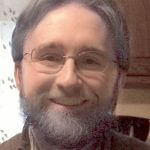
Former New York City Mayor Rudy Giuliani received the Presidential Medal of Freedom on Wednesday in a private White House ceremony.
“America’s Mayor receives America’s highest civilian honor. President Donald J. Trump awards @RudyGiuliani the Presidential Medal of Freedom for true American leadership and a lifetime of public service,” the White House posted on X.
A post on Giuliani’s X account written by staff said, “The mayor was a humble public servant who had the drive to improve the quality of life for all. He saved more black lives with his ingenious policies.”
In a statement, Giuliani said he was “honored and humbled” to receive the award, according to ABC News.
“Any and all distinction I have received in public office is fully the result of following the advice of my boss, Ronald Reagan, who said: ‘There is no limit to what a man can do or where he can go if he doesn’t mind who gets the credit,’” Giuliani wrote.
“I share the credit with all the men and women who worked with me, disagreed with me, and loved me — particularly those who lost their lives in the causes we undertook together,” he wrote.
White House spokeswoman Olivia Wales said that Trump recognized Giuliani with the highest civilian honor for his “lifetime of service to the American people.”
Wales called Giuliani a “dedicated public servant whose decisive leadership has left a lasting impact on New York City and our Nation,” referencing his reduction of crime while mayor of New York City and his leadership after the 9/11 attacks.
Long before he led New York City out of the 9/11 attacks, Giuliani was an aggressive prosecutor who took on organized crime, as noted by ABC News.
In a 2011 interview with Forbes, he described how he was inspired by Winston Churchill as he led the city.
“Because during the day I had been thinking about the Battle of Britain. I had been thinking, ‘The English went through something worse than this. They went through being bombarded every day, bombed every night, not knowing who was going to be alive the next day. And they got through it,’” he said.
“If they could get through it, we should be able to get through it,” he said.
Signing you in…
Please keep this page open. The results will appear here.
Check your email to count your vote
We sent a confirmation link to .
Click Confirm Your Vote in that email to count your vote and unlock the results.
Your vote has not been counted yet. If the email hasn't arrived, check your spam or junk folder.
He described one moment of chaos that fateful morning when he was in a police command post near the Twin Towers.
“And we had gotten to the point where the White House secretary had said, ‘Mr. Mayor, the Vice President will be on the phone momentarily.’ And all of a sudden the phone goes out. The building starts to shake, the table starts to shake. People are going under the tables. I had no idea what was happening,” he said.
“And someone yells out, ‘The tower came down and it’s hitting the building.’ And I thought they meant the radio tower on the top of the World Trade Center. I didn’t think they meant the whole tower, although it seemed like a heck of an impact just for a radio tower. But I couldn’t put all that together. Then we tried to get out of that building because we were worried it might — we had no idea how much damage was done to it. It might crumble,” he said, explaining that they emerged into thick dust from the collapse.
“And outside looked like something out of a movie about a nuclear attack, you know? This cloud in the street, and people getting hit with debris. So there was a certain sense of momentary relief, and then a sense of, ‘Maybe we’ve gone from bad to worse,’” he said.