

Once a global leader in energy innovation, California is now becoming a case study in how to sue an industry out of existence.
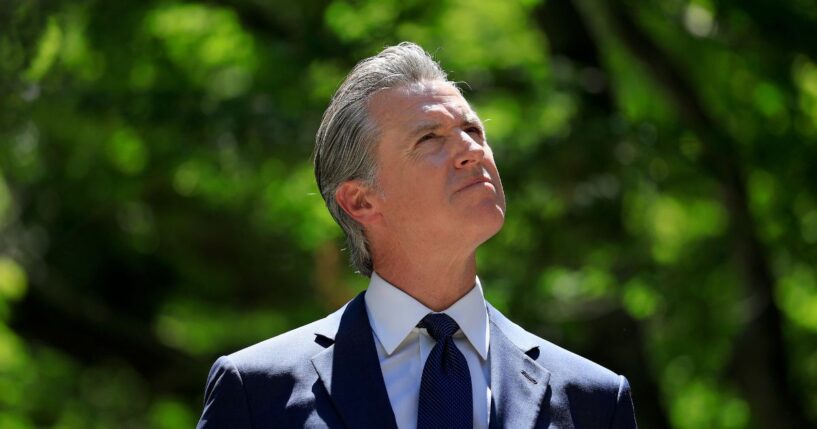
Gavin Newsom has turned the state into a legal meat grinder for energy producers, dragging them into court and demanding billions in damages for “more than 50 years of deception, cover-up, and damage” over climate change — driving investment out of the state in the process.
Yet, as Politico reported on Aug. 4 4, Newsom is now pleading with the very companies he’s suing not to leave, as his green energy plans have led to soaring prices and refinery closures.
To make matters worse, Newsom’s blueprint is going national. Climate litigation is spreading across blue states, where courts are being weaponized in what amounts to a proxy war on domestic energy.
Cities and states are filing lawsuits blaming oil companies for wildfires, hurricanes, heatwaves, and other weather events — often under the unsubstantiated theory that the industry knew about climate risks and misled the public. The cast of plaintiffs may vary, but the victims of this lawfare remain the same: the American people, along with our economic and national security.
From Hawaii to Illinois to New York, Democratic officials are partnering with activist lawyers to extract billions in settlements and funnel the cash into politically favored energy alternatives the market won’t adopt on its own. Meanwhile, Americans are paying the price — literally.
In California — the epicenter of this war on energy — refinery closures could push the cost of regular gasoline up by as much as 75 percent by 2026. Illinoisans and New Yorkers are facing double-digit utility rate hikes to fund green mandates and gas-to-electric conversions. On the reliability front, the North American Electric Reliability Corporation warns that large swaths of the country now face an elevated blackout risk as demand grows and coal plants retire before firm replacements come online. Nationwide, coal plant and mine closures have already cut the coal workforce nearly in half — from over 80,000 miners in 2010 to about 41,000 today — gutting rural tax revenue and wiping out nearly four additional local jobs for every miner lost.
These problems are compounded by the failure of the “green” alternatives to deliver. Even after decades of subsidies, wind and solar still can’t provide affordable, around-the-clock power. With grid demand surging under EV mandates and bans on gas heating, the shortfalls are only expected to worsen.
And, as energy demand grows, left-wing activists are cutting off yet another reliable supply source — and the only proven, carbon-free alternative that actually works: nuclear energy.
The left has been clear that nuclear is not part of its Green New Deal vision, referring to it as a “false solution” to carbon emissions. Party leaders have relied on scare tactics and hysteria to push for the closure of nuclear facilities, block new plant permits, and strangle projects in endless environmental reviews. The result is fewer reliable, zero-emissions options — and an even greater reliance on the intermittent sources they champion.
Unfortunately for Americans, our foreign adversaries have no such energy hang-ups. China is building more nuclear reactors than the rest of the world combined, while Russia has turned nuclear energy exports into a tool of geopolitical influence.
Without a course correction, the United States will lack the reliable energy needed to meet soaring demand, deepening our dependence on foreign supply chains — many controlled by the Chinese Communist Party — just as our competitors strengthen their energy independence.
Thankfully, the judiciary is beginning to show signs of fatigue with the climate lobby’s overreach. In Charleston, South Carolina, a judge dismissed the city’s lawsuit against oil companies, noting that the plaintiffs’ theory of liability would open the door to an endless wave of lawsuits over every weather event. The court ruled that the claims — though framed as fraud and consumer deception — were ultimately attempts to regulate greenhouse gas emissions and, therefore, belonged under federal law, not in a state courtroom.
Similar decisions have emerged in cases from Maryland, New Jersey, and Pennsylvania, where judges have expressed concern that climate litigation could overwhelm courts with conflicting rulings and impose de facto energy regulations through the judiciary.
In short, even sympathetic jurisdictions are starting to realize this legal strategy is unworkable, unmoored from statute, and increasingly unhinged from common sense.
But even where courts dismiss the claims, the damage is already done. The mere threat of climate lawfare deters investment and injects deep uncertainty into an industry that underpins every other sector of the economy. That uncertainty filters directly into consumer bills — and deepens America’s dependence on energy we no longer control.
We need to stop pretending climate lawfare is a noble crusade. It is a legal and economic bludgeon, wielded by activists and politicians who have weaponized litigation for political and financial gain. If left unchecked, it will leave America weaker, poorer, and more reliant on its adversaries just to keep the lights on.
The views expressed in this opinion article are those of their author and are not necessarily either shared or endorsed by the owners of this website. If you are interested in contributing an Op-Ed to The Western Journal, you can learn about our submission guidelines and process here.